

Hard water in Wiltshire
Wiltshire is one of the regions having the hardest water in the United Kingdom.
Water is made ‘hard’ by naturally occurring calcium and magnesium. Whether water is hard or soft depends on the geology of the area. The geology of Wiltshire is based on limestone and chalk (the best illustration of this is the famous White Horse). When the falling rain passes through the limestone rock, it collects calcium carbonates that make water hard.
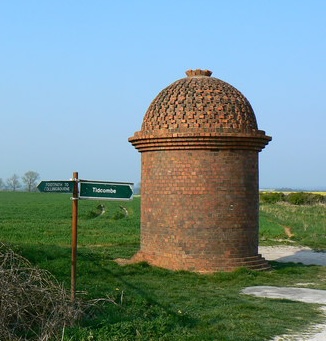
Wiltshire people had to deal with hard water problems for centuries. The historic sources dated around 1800 describe the situation in Chippenham. There were several wells in the town but most of them produced water too hard to be used for some domestic purposes. Therefore, two or three persons were employed to carry water from the River Avon to different areas of the town. They were paid three pence per barrel. There was also a well in the centre of the town equipped with a large pump – water from this well was not as soft as water from the river, but not as hard as from other wells. This was because the well was very deep – or at least it was believed so.
The image here is a old pumping station near Wexcombe. There is often very little to see when you stumble across Wiltshire water sources. However you can very clearly see the source of the hardness!
Nowadays the hardness of water is measured precisely by the concentration of calcium carbonate (CaCO3). In Wiltshire, the water can contain even more than 300 milligrams of calcium carbonate per litre and it is classified as ‘very hard’.
Hard water does not pose a danger to human health and there is no health based standards for the hardness of drinking water. However, hard water can damage home water systems and equipment. It causes scaling in washing machines, kettles and irons. Hard water produces less foam from washing powders, soaps and washing up liquids than soft water, making washing and cleaning more difficult. It also leaves marks on basins, washing machines and sinks.
To find out if you have hard water you should ask you water company directly, as within generally hard water regions there are pockets with soft water. Most Wiltshire residents are provided with water by Wessex Water, Southern Water or Thames Water. Additionally, Veolia Water Projects Ltd. manages water supply arrangements at Tidworth and SSE Water serves Old Sarum, Salisbury.
You can go to our web page on how hard is my water where you will find links to the water company web page were you can enter your postcode.
The majority of drinking water in Wiltshire originates from underground aquifers. These are natural underground reservoirs storing rainwater that has slowly saturated through the soil and rock. The water from aquifers is generally of a very good quality and requires limited treatment to meet strict standards before it is delivered to customers. Once treated, water is transferred to pumping stations and it is supplied by water companies to households and other buildings.
One of the oldest water pumping stations in Wiltshire is the Kennet and Avon Canal’s Crofton. Over 200 years old, the station is famous for its steam engines (one of them is the oldest working steam engine in the world still capable to do its job).